


Anaerobic
Gasketing
Whether it is the automobile industry, manufacturing, or power generation, the need for high-performing and reliable gasketing sealant materials to keep processes running smoothly is essential.
High Temperature Gasketing Sealants
For manufacturing or other industrial uses, a high temperature gasketing sealant is a must-have to keep manufacturing or power plants running efficiently and effectively. Henkel’s LOCTITE® NS 5540 and NS 5550 are specifically designed for repair and maintenance uses that require effectiveness under high temperatures. Henkel has the gasketing sealants that perform under extreme conditions whether it be high pressure or high temperatures applications.
Anaerobic Gasketing Sealants

Anaerobic gasketing sealants are used in tight areas where air cannot reach. Henkel’s anaerobic liquid gasketing sealants are generally temperature resistant and cure upon contact with metal ions when air is not present. Henkel’s anaerobic gasketing sealant solutions are designed to add stiffness to the entire flange and offer reliability while maintaining an airtight seal.
Gasketing Sealants for Electronics

Gasketing electronic devices requires high-quality materials that can be used for different applications. From circuit boards to automotive displays, Henkel has gasketing solutions for a variety of electronic devices. Henkel’s LOCTITE® brand provides electronic liquid gasketing sealant benefits such as process automation, emission improvement, improved chemical resistance, and better cost efficiency.
-
Gasketing electronic devices requires high-quality materials that can be used for different applications. From circuit boards to automotive displays, Henkel has gasketing solutions for a variety of electronic devices. Henkel’s LOCTITE® brand provides electronic liquid gasketing sealant benefits such as process automation, emission improvement, improved chemical resistance, and better cost efficiency.
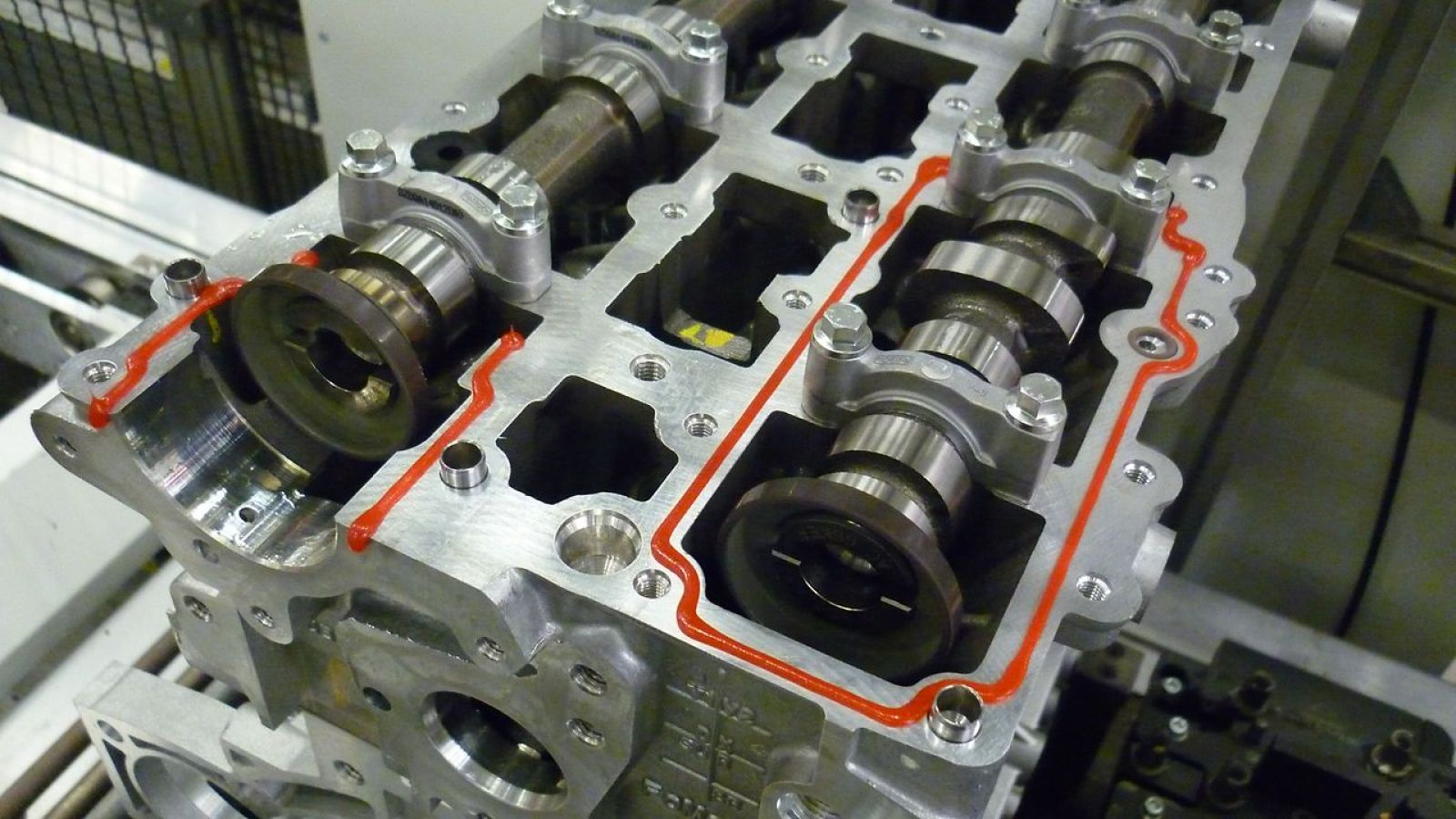
Cured-In-Place Gaskets (CIPG)These gaskets are formed by applying a bead of liquid elastomer that is cured before assembly. These gaskets are dispensed onto a groove or step using automated high-precision equipment, generating a uniform solid compression gasket. The material is cured immediately after dispensing either by ultraviolet (UV) light, by heat or through a multi component system. The cured gasket adheres to the applied flange and, when assembled, is compressed between the mating parts, thereby closing the existing gaps. Sealing is achieved through compression of the cured gasket during flange assembly, similar to soft gasket material (SGMs).
Advantages of CIPG over SGMs:- Increased productivity
- Reduced tooling costs
- Supply chain simplification
- Easier handling of vertical components
- Reduced inventory costs
- Design flexibility paths
- Chemical compatibility
Formed-In-Place Foamed Gaskets (FIPFG)These gaskets are formed by applying a bead of liquid elastomer onto one of the flanges to be sealed, which will be foamed either by a neutral gas or by gases released by the reaction of two components during the dispensing process. Depending on the process, the resulting gasket will have either open cells, mixed cells, or closed cells. The material is cured after dispensing either by ultraviolet (UV) light, by heat or through a multi-component system. The cured gasket adheres to the substrate flange and, when assembled, is compressed between the mating parts, thereby closing the existing gaps. Sealing is achieved through compression of the cured gasket during flange assembly, similar to CIPGs.
-


